

Is Plasma Fibroblast Eyelid Tightening Right?

The skin around the eyes can be one of the first areas to show tiredness. Fine creasing, a slightly hooded appearance and loose-looking upper eyelid skin may make someone feel less refreshed, even when they are well rested. Plasma fibroblast eyelid tightening is a non-surgical treatment designed to improve mild skin laxity in this delicate area, but it is not a quick fix or a treatment that suits every concern.
The eyelids demand a particularly cautious approach. Good outcomes rely on careful facial assessment, appropriate technique, realistic expectations and committed aftercare. For clients seeking a fresher, naturally refined look rather than a dramatic change, a thorough consultation should always come before a treatment decision.
What is plasma fibroblast eyelid tightening?
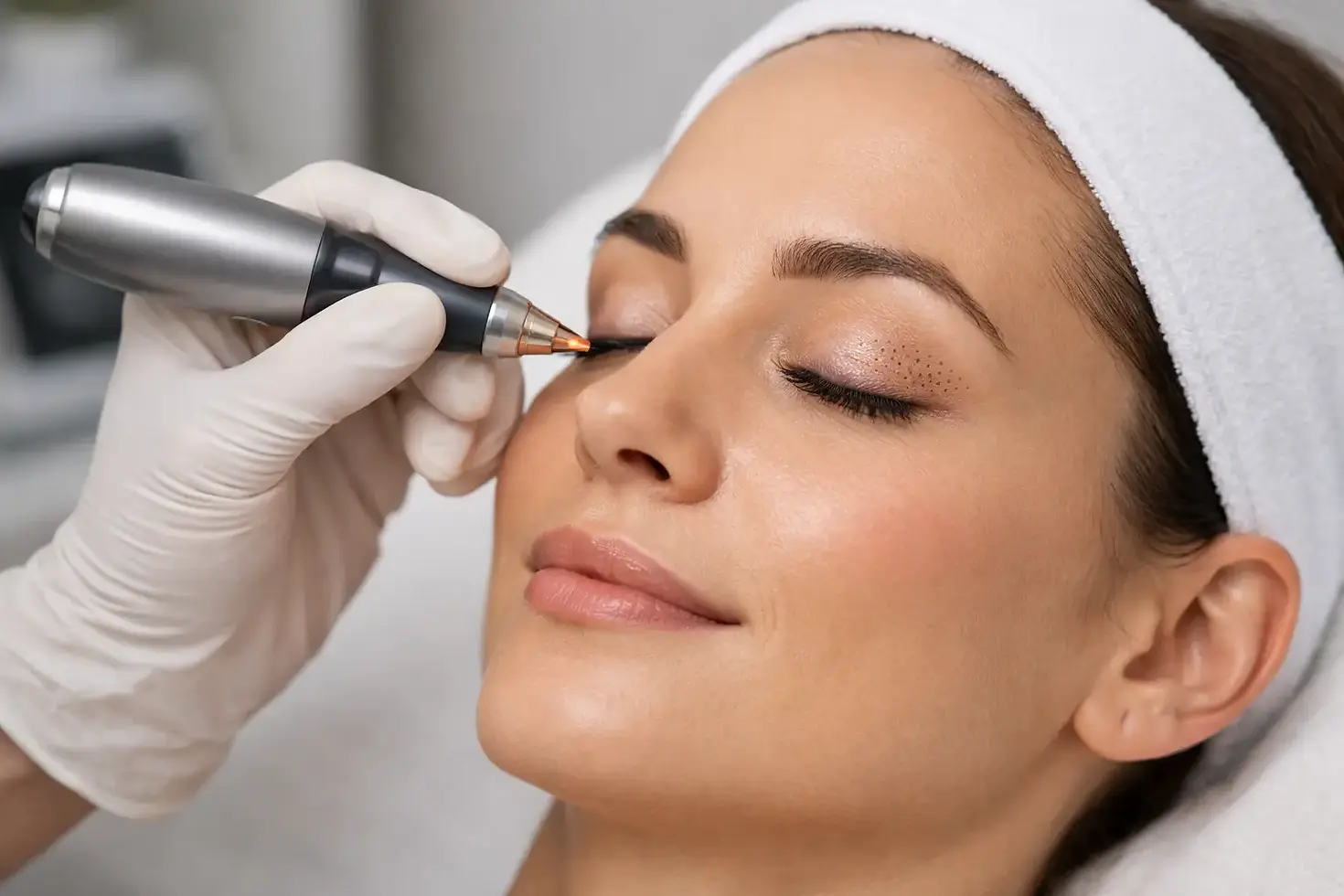
Plasma fibroblast treatment uses a specialist device to create tiny, controlled points on the skin's surface without the tip directly touching it. The device creates a small electrical arc, known as plasma, which produces precise superficial micro-injuries. These form small carbon crusts as the area begins to heal.
The controlled healing process is intended to encourage skin renewal and support collagen and elastin production over time. On the upper eyelids, the treatment may help skin appear firmer and smoother where laxity is mild. It can also be considered for fine lines around the eyes, depending on the individual's skin quality and the exact area being treated.
Despite the name, the treatment is not simply a way to ‘shrink’ excess skin. Results develop through the healing response, and they vary between people. A responsible practitioner will explain what degree of change is realistically achievable for your eyelid anatomy, rather than promising a particular lift.
What concerns can it help with?
Plasma fibroblast is most often considered when the upper eyelid skin has begun to look crepey, fine lines have become more noticeable, or there is a modest loss of firmness. It may appeal to clients who want to address these changes without injectable volume or a more invasive procedure.
However, not all under-eye or eyelid concerns are caused by skin laxity. Dark circles can relate to pigmentation, hollowing, blood vessels or lifestyle factors. Puffiness may be linked to fat pads, fluid retention or allergies. A heavy-looking eyelid can also reflect brow position and overall facial structure. Treating the skin alone will not necessarily resolve these concerns.
This is why assessment matters. The aim should be to identify the feature creating the concern and select a treatment plan that respects the balance of the whole face. Sometimes plasma fibroblast is appropriate; sometimes honest advice means it is not the best route.
Suitability matters more around the eye area
The eye area is thin, mobile and highly visible, so treatment selection should never be based on photographs alone. A consultation should include a discussion of your medical history, current skincare, previous aesthetic treatments, skin healing history and desired outcome. Your practitioner should assess the quality and amount of laxity in the skin, as well as your natural eyelid and brow position.
People with mild to moderate laxity and realistic expectations can sometimes be suitable candidates. Those who understand that healing is visible for a period, and who can follow aftercare carefully, are generally better placed to plan treatment safely.
Suitability can be more limited for people with active skin infections, irritated or broken skin in the treatment area, a tendency towards problematic scarring, or certain medical conditions and medications. Recent or current use of medication that affects skin healing should always be disclosed. Pregnancy and breastfeeding policies vary by clinic, but treatment is commonly postponed as a precaution.
Skin tone also needs considered discussion. Plasma treatments can carry a risk of post-inflammatory hyperpigmentation, particularly in skin that is more prone to pigment changes. This does not automatically rule treatment out, but it does mean the risk-benefit balance, preparation and aftercare need to be considered very carefully. A patch test may be advised where appropriate.
What happens during the appointment?
A plasma fibroblast eyelid tightening appointment begins with confirming the plan agreed at consultation. The area is cleansed and a topical numbing cream may be used to make the procedure more comfortable. Once the skin is prepared, the practitioner places a deliberate pattern of tiny treatment points across the planned area, while keeping a safe approach to the eye itself.
You may notice a warm, prickling sensation and a faint smell associated with the treatment. The appointment length depends on the size of the area and whether one or both eyelids are being treated. The treatment itself is usually relatively short, but no appointment should be rushed simply because the area is small.
Immediately afterwards, the skin is likely to look red and feel warm. Swelling is common around the eyelids and can be more noticeable the following morning. Tiny dark crusts will also be visible at each treatment point. These are an expected part of the healing process and should not be picked, rubbed or prematurely removed.
Healing: plan for visible downtime
The social downtime is one of the most important practical considerations. Most clients should expect visible swelling and crusting for around a week, although healing times differ. Upper eyelid swelling may be quite pronounced initially, while the small crusts generally dry and shed naturally over several days.
It is sensible to schedule treatment when you can avoid important social events, holidays, intense exercise and heat exposure during the early healing period. Makeup should not be applied until the skin has healed sufficiently and your practitioner has confirmed it is appropriate. Sun protection is especially important once the skin barrier has recovered, as ultraviolet exposure can increase the risk of uneven pigmentation.
Aftercare guidance should be clear and personalised. In general, this includes keeping the area clean, avoiding touching the crusts, following the recommended product advice, and protecting the healing skin from heat and sunlight. Do not rely on a generic social media aftercare routine. The products and timings that are suitable for one treatment or skin type may not be right for another.
When will you see results?
There can be an early impression of tightening once swelling has settled, but the more meaningful changes take time. As the skin continues its renewal process, improvement may develop gradually over several weeks and can continue to mature for several months.
The degree of improvement depends on skin quality, age, lifestyle, sun exposure, smoking status, the amount of laxity present and how the skin heals. Some clients may be pleased with the result of one session, while others may need a further treatment after an appropriate review period. More treatment is not always better. The goal is measured improvement that still looks like you.
Results are not permanent because the skin continues to age naturally. Maintaining good skincare, daily sun protection and healthy lifestyle habits can help support the condition of the skin, but no treatment can stop future changes.
Risks and the value of experienced care
Every aesthetic procedure carries risk, and this is particularly relevant close to the eyes. Potential side effects include temporary redness, swelling, tenderness and crusting. Less common but more significant risks include infection, prolonged redness, scarring, pigment changes and uneven results. Poor technique, unsuitable treatment selection or inadequate aftercare can increase these risks.
Choosing a qualified, insured practitioner with advanced training is therefore not an optional extra. Ask how suitability is assessed, what aftercare and review process is provided, and what to do if you are worried during healing. You should feel able to ask direct questions about risks as well as likely benefits.
At ReShapeU Aesthetics & Skin Clinic, treatment planning is consultation-led and guided by Level 7 clinical expertise, facial assessment and honest advice. If plasma fibroblast is not the most appropriate option for your eyelid concern, that should be discussed openly before any commitment is made.
A considered choice for a delicate area
Plasma fibroblast can be a worthwhile option for carefully selected clients with mild eyelid laxity who are prepared for visible healing and gradual results. It is not about changing the character of your eyes. At its best, treatment supports a subtly smoother, more rested appearance while preserving the features that make your face recognisably yours.
If your eyelids are bothering you, begin with a professional consultation rather than a treatment promise. A careful assessment gives you space to discuss your concerns, understand the trade-offs and make a confident decision based on what is genuinely suitable for your skin.


Comments